Leak Detection
Track down hidden water loss using listening gear and thermal imaging, so only a small patch gets opened.
Pools lose water to the sun and wind every day in the desert, so the real question is whether yours is losing more than it should. A plumber can tell and then trace the loss.
Run the bucket test first and report the result when you phone.
Summer sun and wind pull real water out of a pool here without any leak at all. A bucket test separates the two: set a bucket on a step so it floats in the pool, match the levels and measure both again after a day.
If the pool drops more than the bucket, a leak is likely. Run the test again with the pump off and then with it on. A loss that only shows with the pump running points to the pressure side of the plumbing.
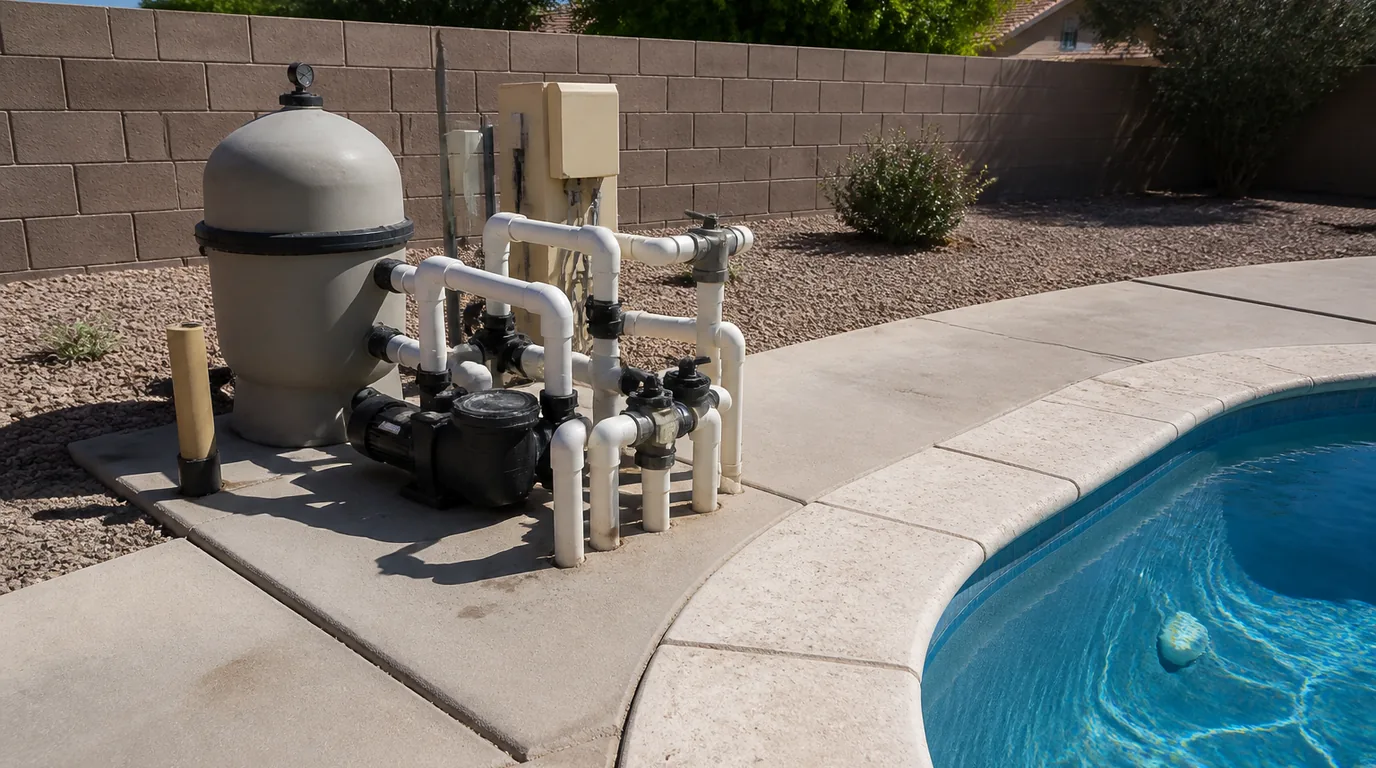
Common sources include the pump and filter connections, valves, the heater, underground return and suction lines, and the skimmer. Fittings at the equipment pad are the easiest to check, because they are in view.
Leaks in buried PVC are harder to find. The plumber isolates each line with plugs, pressure tests it and listens along the route. A spa attached to the pool adds its own plumbing and jets, and it can leak on its own.
Price follows how hard the leak is to locate and what turns out to be damaged. These points count most.
Ask the contractor to say in the quote what is being tested and what a repair would cover.
Most Peoria backyards put the pool or spa behind a block wall, with the equipment on a pad near the house. That keeps the plumbing short, which helps, but the sun heats exposed pipe and fittings and can make older PVC brittle over the years.
Water loss also shows up on the home's bill. If your meter or your bill climbs in summer, the pool is worth ruling out along with the irrigation and the toilets.
Once the leak is located, a failed fitting or valve can be replaced in a short visit. A buried line may need a trench, and a break in the pool shell or a light niche needs a pool specialist. A plumber can tell you which type you have.
Keep the pool level in range for the pump while you wait for the repair. A pump that runs dry can overheat and damage its seal.
Spa equipment sits on a pad like the pool's, with a pump, a heater and a set of unions. Weeping unions and cracked fittings are common culprits, and many are visible without any digging.
Check the pad after the pump runs. Wet concrete, a drip from a valve or white mineral crust at a joint tells you where to look first.
Underground pool plumbing and equipment pads are plumbing work too. Whoever works on buried pool lines should show up as licensed at roc.az.gov, the Arizona Registrar of Contractors lookup.
Track down hidden water loss using listening gear and thermal imaging, so only a small patch gets opened.
Buried supply pipe trouble from meter to house, handled with a repair or a fresh run.
Stop irrigation, pool and reclaimed water from flowing back toward the drinking supply.
Set a bucket with water on a pool step, match the water levels inside and outside and wait a day. If the pool drops more than the bucket, suspect a leak.
Yes. A spa has its own pump, heater and plumbing. Ask the plumber to test it with the pool.
That often points to the pressure side of the plumbing, for example a return line or a fitting close to the pump.
Yes, calls are answered at all hours. A pool losing water quickly, or a puddle around the equipment pad, should be reported at once. Turn off the pump if the water falls below the skimmer opening.
Ask when you call. Equipment pad plumbing is ordinary pipe work, and the contractor can tell you whether the job is within their scope.
It can be. Jets, fittings and the shell are all possible sources. Tell the dispatcher it is a spa so the right contractor takes the call.
Do the bucket test, then call. Tell the dispatcher what you found and whether the spa is involved.
Service area centered on Peoria and nearby Maricopa County cities.