Pool Leak Detection & Repair
Work out whether a pool or spa is leaking or just evaporating, then locate the loss.
A backflow preventer keeps water from running backward into the drinking supply. Properties with irrigation, pools or reclaimed water often have one, and it needs testing from time to time.
Ask your water provider what testing schedule applies to your property.
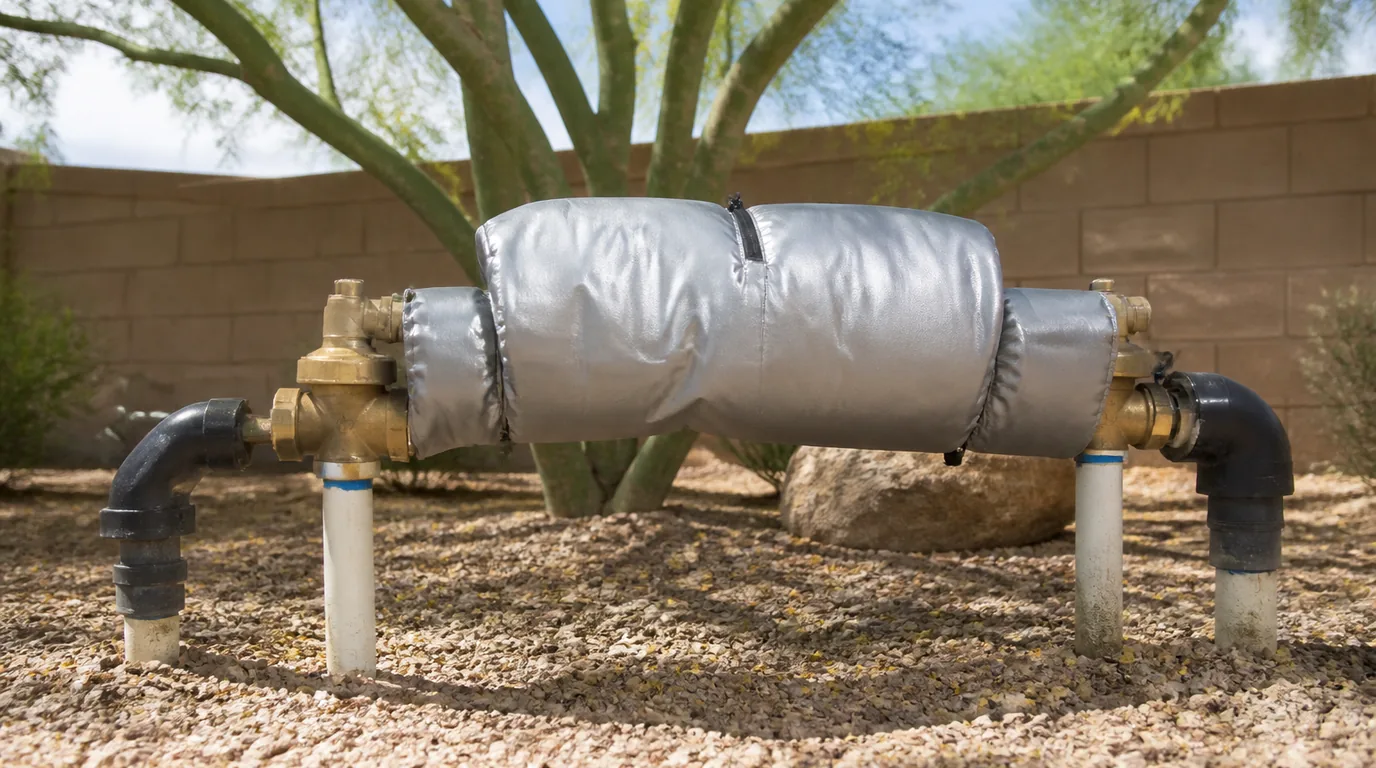
Normally, water flows from the supply into the house. If pressure in the supply drops, or pressure in the property rises, water can flow the other way. That can pull water from a sprinkler line, a pool or a hose into the drinking supply.
A backflow preventer is a valve fitting built to block reverse flow, protecting both the household and the neighbors on the same water system.
Common types include a pressure vacuum breaker on irrigation lines, a double check valve for lower-hazard connections and a reduced pressure assembly for higher-hazard ones. A hose bib vacuum breaker, which screws onto a hose faucet, is the simplest.
The right type depends on the hazard, and the water provider usually specifies it. A plumber can tell you which one your property needs.
Testing and repair are priced separately. These factors matter most.
Check that the quote covers sending the report to your water provider.
The City of Peoria says its supply includes reclaimed water for parks and landscaping, along with Central Arizona Project and Salt River Project water. Reclaimed water uses its own purple-marked pipes, and it must be kept separate from drinking water.
If your property uses irrigation, ask the city or your provider about the testing rules. Contractors that test and repair devices usually need to be certified, so ask about certification when you book.
A certified tester checks that the valves seal properly, using a gauge to measure the pressure differences across the assembly. If a part fails, it is repaired or replaced, and the assembly is retested.
Many providers require a report each year. Ask yours who accepts the report, and by when it must be filed.
Backflow assemblies installed above ground can be damaged by lawn equipment, sun and vandalism. Keep the area clear, and do not bury or cover the device. A cage or a cover can protect it.
If the device leaks or spits water when the sprinklers start, call a plumber. A device that fails to hold pressure may not protect your water.
Locate the device before the tester arrives and clear weeds, mulch and stored items from around it. Know whether it sits on an irrigation line, a pool fill or a commercial supply, because the report form changes with the use.
Keep last year's report where you can find it. If the provider has sent a notice, have the account number and the due date at hand, and mention both when you call.
Expect the water to go off briefly during the test. Sprinklers and outdoor taps stop working while the assembly is checked, and the tester restores everything once the report is done.
Assemblies are made to standards such as ASSE 1013, and testing is done by a certified tester. Ask to see the tester's certification and keep the test report. Besides the tester certification, confirm the company license at roc.az.gov, the Arizona Registrar of Contractors lookup.
Work out whether a pool or spa is leaking or just evaporating, then locate the loss.
Restrooms, kitchens and water systems kept working in shops, offices and rental buildings.
Extend or mend gas piping for a range, dryer, grill, fire pit or heater.
Many providers require a test each year. Ask yours what applies.
A certified tester. Ask for proof of certification when you book.
Call a plumber. A leaking device may not protect your water supply.
Calls are taken at all hours. A yearly test can wait for a weekday slot, but a device that sprays or drips steadily deserves a prompt report.
It depends on the number and type of assemblies. Ask for a quote that covers the test, the report and any repair.
Ask on the call. A property with several assemblies can be quoted as one project.
Call and say what type of property you have. The person who answers will hand you to a contractor who tests devices.
Service area centered on Peoria and nearby Maricopa County cities.