Hydro Jetting
Wash grease, mineral scale and fine roots off the pipe wall with pressurized water.
A single slow drain is a nuisance. A drain that backs up with the washer running, or several that slow at once, is a warning about the line behind them.
Name the fixtures that are slow and say if more than one is affected.
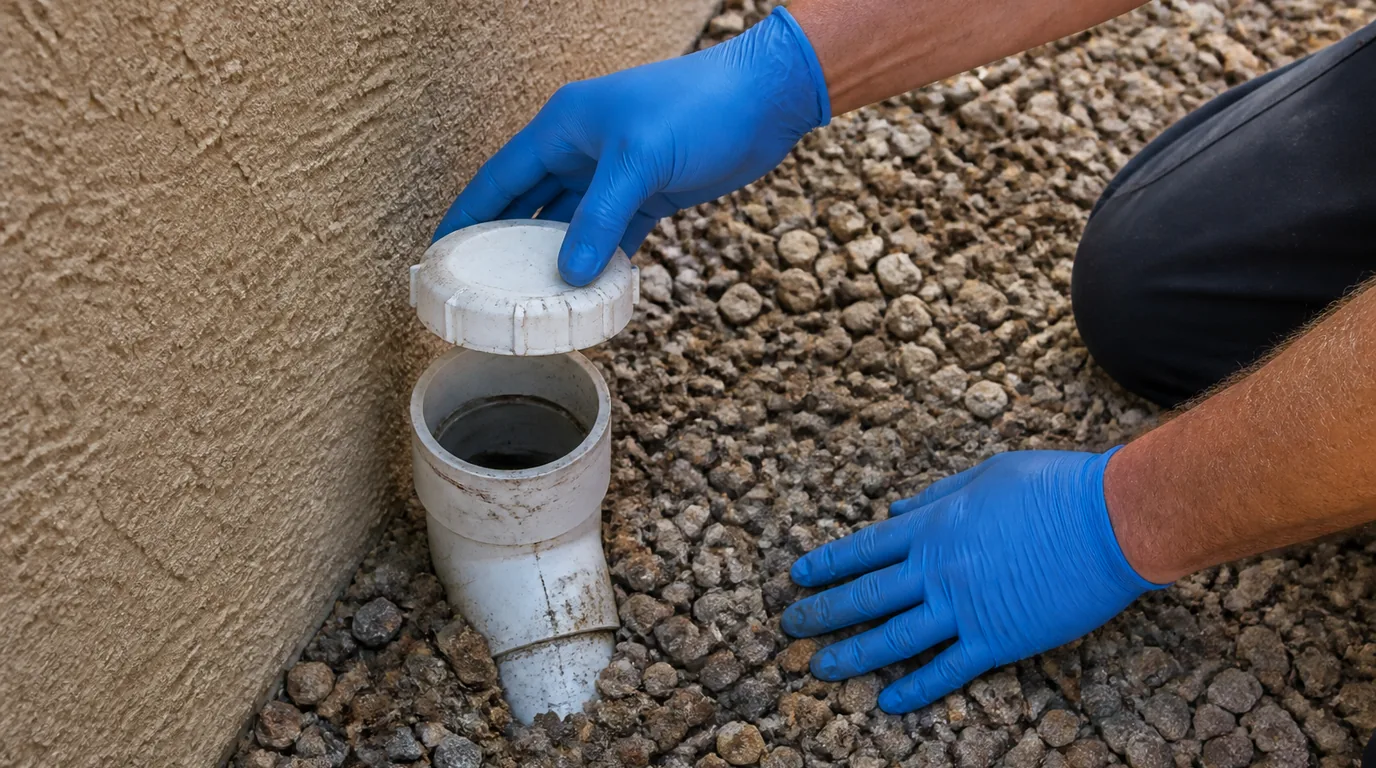
A clog in one sink, tub or toilet is usually local. A plunger, a hair catcher or cleaning the P-trap clears many of them. Chemical cleaners are best avoided, because they can damage pipe and make a later repair more hazardous for the person doing it.
If the clog returns within days, or if the plunger moves water but nothing clears, the blockage is probably further down the line. That is the point at which a cable machine or a jetter is the right tool.
The drains in a house all feed one main line. If the shower, the kitchen sink and a toilet all slow down together, the blockage is probably in that main line or in the lateral running to the sewer.
A telltale sign is water showing up in the lowest fixture when you run another. If a washing machine drain fills the tub, stop using water and call. Each flush pushes more waste toward the house instead of away from it.
Desert landscaping does not mean root-free sewer lines. Palo verde, mesquite and other thirsty trees can send roots toward a joint, and older clay or cast iron pipe is easier for roots to enter than newer plastic.
The City of Peoria's water FAQ lists a question about who is responsible for sewer backups. Read that answer on the city's site, because the line between utility and owner can differ by address.
Drain work is priced by the access, the method and the time. These are the main drivers.
Ask if a camera look is part of the visit and what happens if the line clears but the symptoms come back.
A cable machine pushes a spinning head through the blockage, cutting it apart. Against grease, scale and fine roots, hydro jetting blasts the pipe wall clean with pressurized water, and it is covered on the hydro jetting page.
After clearing, a good plumber runs a camera through the line when the symptoms suggest a deeper problem. The picture shows whether the clog was a one-time event or a sign of a crack, a sag or roots. A sewer camera inspection is the tool for that.
Grease poured down the kitchen drain cools and builds up on the pipe wall. Wipes sold as flushable do not break apart like toilet paper. Roots enter at joints and cracks, and sagging sections hold water and collect debris.
Prevention is mostly habit: strain food out of sinks, put grease in the trash, keep wipes out of toilets and clear a slow drain early. A line that has already been cleared twice in a year needs a closer look.
Any contractor who opens or modifies drain piping should hold a valid license. If a contractor plans to open drain piping, ask for the license number and run it through roc.az.gov, the state contractor lookup.
A single slow sink is a different job from a toilet, a tub and a floor drain all backing up together. One fixture usually means a local clog. Several at once point to the main line, and that needs a different tool.
Grease, food scraps and coffee grounds build up inside the pipe and trap more. A kitchen drain that clears and returns within weeks needs the pipe walls cleaned, not just a hole poked through.
Hair and soap form a plug a few inches below the drain. Many of these clear with a snake. Water backing up under a tub or standing in a shower is a sign to stop using that fixture and call.
When toilets gurgle, floor drains rise or water appears at several fixtures, the main line is blocked. Do not keep running water. Phone the 24/7 line, and see sewer line repair if the clog keeps coming back.
A cable machine pushes a cutting head through a clog. It suits hair, paper and simple blockages. Where grease, scale or roots keep returning, hydro jetting washes the pipe wall instead. The contractor decides based on what the pipe is doing.
Wash grease, mineral scale and fine roots off the pipe wall with pressurized water.
Send a camera through the line to see the real condition before you spend on a fix.
Mend a cracked, root-clogged or sagging sewer pipe through digging, lining or patching.
Air is being pushed through the drain system by a partial blockage in the main line. If it happens with more than one fixture, call early.
It is better to avoid it. Strong chemicals can damage pipe and can splash on a plumber who has to open the drain afterward.
A healthy drain does not need regular cleaning. If one clogs more than once a year, ask for a camera look to find out why.
The line is open all day and night, weekends included. A main line pushing water back into tubs and floor drains is the kind of call to make right away, while a slow kitchen sink can wait for daytime.
It depends on the fixture, how far the clog sits and the tool needed. A simple sink and a main line backup are very different jobs. Ask for a clear quote before work begins.
A repeating clog usually means buildup on the pipe wall, roots, or a pipe that has sagged. A camera inspection shows which. Clearing it once only treats the symptom.
Tell the dispatcher the exact fixture. Floor drains, tubs and cleanouts each need access that a standard sink snake cannot reach.
Yes, because sewage can reach floors quickly. Stop all water use and phone the 24/7 line. Do not use the toilets or the washer while you wait.
That points to a shared branch line. Stop using both and ask for a cable or jetting visit, since the blockage sits past the sink traps.
Stop using water, then phone. Name the fixtures involved and say whether anything is rising through the lowest one.
Service area centered on Peoria and nearby Maricopa County cities.