Burst Pipe Repair
Stop the flooding first, then cut out the split section and inspect the pipe nearby.
Water trapped in a wall, ceiling or floor goes on causing harm even after the pipe is repaired. Restoration pulls out the water, dries the structure and rebuilds whatever could not be saved.
This page has a dedicated phone line. If you can do it safely, stop the water at the source first.
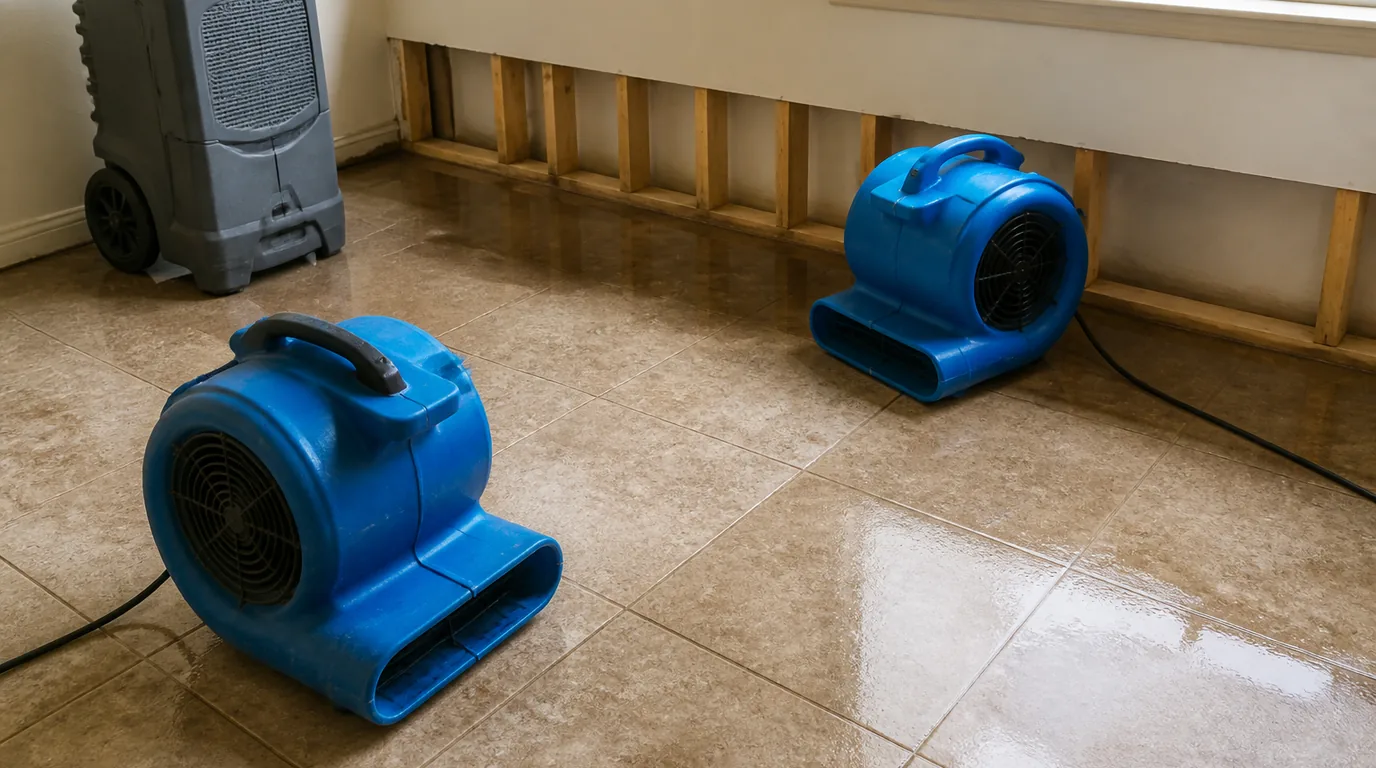
Drywall, insulation, carpet padding and wood absorb water fast. Anything that stays wet past a day or two begins to deteriorate, and mold can start in warm, damp air. Drying quickly holds both in check.
Cut off the water at its source and phone. If conditions are safe, raise furniture off wet floors, pull up rugs, open doors and windows for airflow and keep kids and pets away.
A restoration crew starts by finding where the water went. Moisture meters and thermal cameras show wet material that is not visible. Standing water is pumped out, and soaked materials that cannot be dried, such as carpet padding, are removed.
Air movers push air across wet surfaces, and dehumidifiers pull moisture out of the air. The crew measures readings each day and keeps the equipment running until the structure is dry. Ask for the readings in writing.
The monsoon season runs from about June 15 to September 30, and heavy rain can enter through roofs, windows and doors. Clogged drainage and runoff can also push water toward the foundation.
Homes that sit empty for a while can have a slow leak or a clogged air conditioner drain line go unnoticed. If you return to a damp smell or a stain on the ceiling, call. Water damage behind a wall shows up late.
Restoration is priced by the amount of water and the work needed. These factors matter most.
Ask for a written scope that separates drying from rebuilding, and for the daily moisture readings.
Hard materials such as framing and concrete can usually be dried in place. Drywall and insulation that have been soaked by dirty water, such as sewage or storm runoff, are removed. Carpet may be saved when the water was clean and the response was fast.
The type of water decides much of this. A clean supply line leak is treated differently than water that has been in contact with sewage or outdoor soil. A restoration contractor can tell you which category you have.
Call your insurer early, and keep receipts and photographs. A written moisture log and a list of what was removed help support a claim. Ask the contractor what documentation they provide.
Drying is not the same as rebuilding. After the structure is dry, drywall, paint, flooring and trim need to be replaced. Some contractors do both, and some do only the drying, so ask what is included.
Professional drying follows ANSI/IICRC S500, the standard for water damage restoration, which calls for moisture readings to confirm the structure is dry. Ask the restorer whether they follow it.
Stop the flooding first, then cut out the split section and inspect the pipe nearby.
Track down hidden water loss using listening gear and thermal imaging, so only a small patch gets opened.
Find the failing supply pipe in or under the concrete floor, then decide how to fix it.
It can begin within a couple of days in warm, damp conditions. Dry the area quickly and call for help if the material stays wet.
Sometimes, when the water was clean and the response was fast. Drywall soaked by dirty water is usually removed.
Often yes for sudden events, though policies differ. Call your insurer promptly and ask what is covered.
Yes. This page has its own number, answered at all hours. When it is safe to do so, shut off the water at its source before dialing.
Stop the water at the source if you can, then call the water damage line. A dispatcher answers day or night.
Service area centered on Peoria and nearby Maricopa County cities.