Leak Detection
Track down hidden water loss using listening gear and thermal imaging, so only a small patch gets opened.
Imagine a pressurized water pipe leaking inside or under a concrete floor. How precisely it is located determines whether you end up with a small hole or a ruined room. A slab leak that is wetting the floor or spinning the meter deserves a call at any hour.
Slab leaks rarely stop on their own. Call early and ask about repair options.
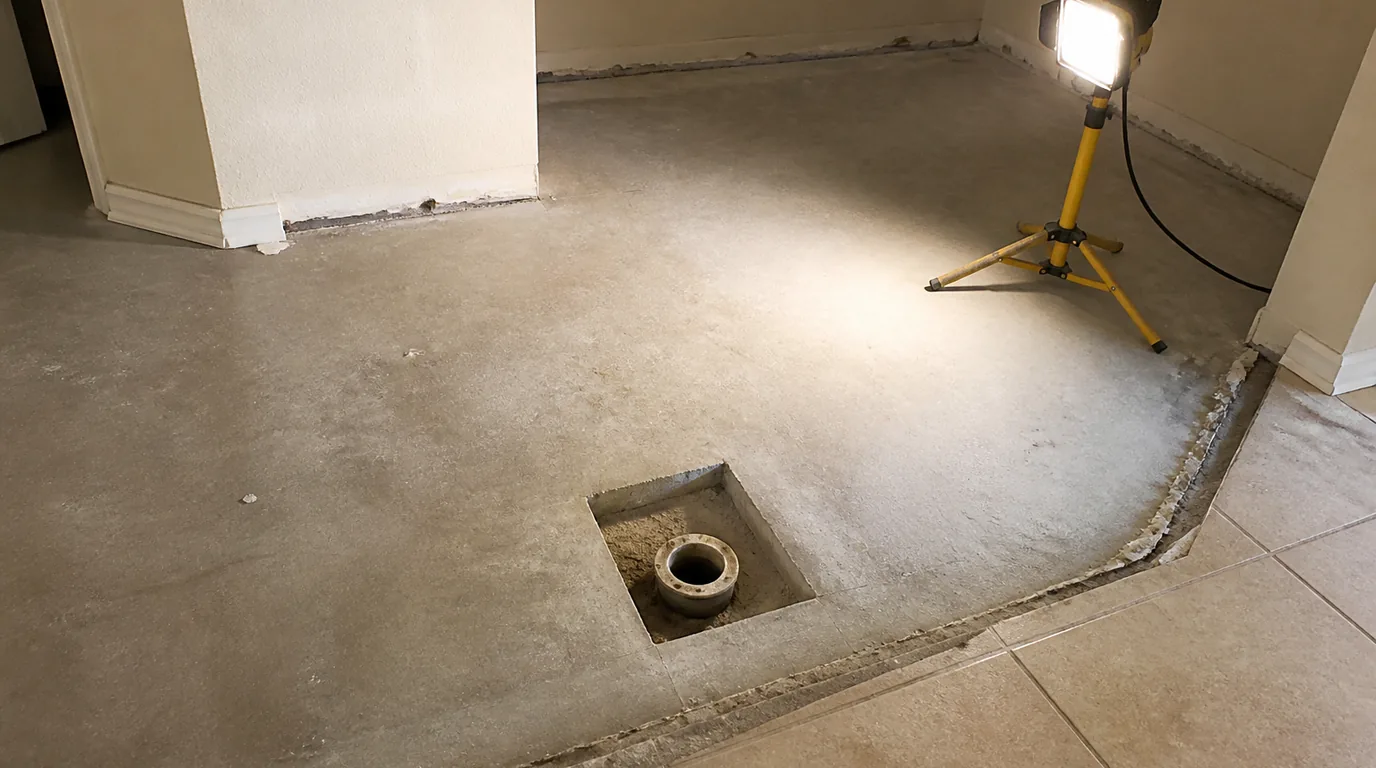
Many homes in the Valley sit on a concrete slab. When the house was built, the plumber laid pipe in the ground or in a sand bed and the concrete was poured over it. A slab leak is a break or a failed joint in one of those lines.
Most often the culprit is a pressurized supply line, hot or cold. A drain can also leak beneath a slab, but it behaves differently because it only leaks while water flows through it.
Copper can corrode outside, where it touches soil or concrete, and inside, where the water attacks it, leaving a pinhole that gradually widens. A line can also wear through where it rubs against gravel or another pipe as the house settles over the years.
Poor workmanship plays a part too. A joint that was never fully seated can hold for years and then let go. Plastic lines have their own weak points at fittings.
Slab work is priced by how deep the problem is and how much restoration follows. These are the main drivers.
Ask who handles the flooring afterward, and whether that work is part of the quote or a separate bill.
Water in the Phoenix area is known for carrying a lot of dissolved minerals. Mineral-rich water is one factor that can shorten the life of metal pipe over many years.
If your house has had one slab leak, ask the plumber whether the remaining lines are worth testing. A second leak elsewhere in the system is not unusual in older copper.
The plumber starts by confirming that a leak exists, using the meter and a pressure check with the house shut off. Next the lines are isolated, hot from cold, to see which one is losing pressure.
Next come ground microphones, which the plumber walks across the floor until the sound peaks. A hot line may also show up as a warm streak on a thermal camera. The loudest or warmest point gets marked, and the opening is cut there.
A slab leak has several possible fixes. A spot repair cuts into the slab above the break and swaps a short length. A reroute retires the leaking run and sends a new pipe through the walls or attic. A repipe renews the whole system if multiple lines are going.
Each choice trades cost, disruption and how long the fix is likely to last. Ask the plumber why a given option fits your house, and get the plan in writing. After the plumbing, the concrete and flooring need patching, and that is often a separate trade.
Cutting into a slab changes the structure, so confirm the contractor's license before agreeing to it. Search the contractor name or license number at roc.az.gov, the Arizona Registrar of Contractors site, before they cut into the slab. Ask for the scope in writing, including who repairs the floor finish.
Wet flooring, a warm spot on the tile, the sound of running water with everything off, or a damp edge where the slab meets the wall all point to a line under the concrete. Water seeping up through a driveway or garage floor means a supply or drain pipe has failed below.
Reaching a pipe under a slab means cutting concrete. The opening should be as small as the finding allows. Ask who repairs the floor surface afterward, since that is often a separate trade, and whether the quote covers it.
A single failed section can sometimes be repaired in place. When the line has failed more than once, rerouting through the attic or walls, or repiping the house, can cost less over time than repeated slab openings. See repiping and whole-home pipe replacement for how that decision is made.
Track down hidden water loss using listening gear and thermal imaging, so only a small patch gets opened.
Replace the worn supply lines throughout a house once spot repairs stop holding.
Pull out the water, dry the structure and rebuild what a leak or storm soaked.
A warm floor patch, the sound of water when everything is off and a meter that never rests are the usual signs. A pressure test lets the plumber confirm it.
Often. Spot repair opens a small area of floor, and a reroute sends a new line through the walls or attic instead. The right choice depends on the layout.
Coverage varies. Many policies pay for the resulting water damage but not for the worn pipe. Check with your insurer before work begins and keep the plumber's written findings.
It might be. Water seeping up through the floor, a meter that keeps turning or a hot spot on the slab means shutting off the supply and phoning the 24/7 line. A slow leak can wait for morning but not for days.
Shut off the main valve and phone. Water under a floor can soften flooring and move soil, so waiting for a daytime slot is a poor idea when water is actively showing.
Most Peoria homes sit on slabs, so crawlspace leaks are less common here. If your home has a raised floor, the leak is easier to reach, and you should mention that when you call.
Ask the dispatcher. A line under a driveway is a water line or drain problem, and the contractor will need to confirm the location before quoting any cutting.
If the floor is wet, shut the main valve and phone. Describe the warm spots and the sound, and the dispatcher will handle the rest.
Service area centered on Peoria and nearby Maricopa County cities.