Sewer Camera Inspection
Send a camera through the line to see the real condition before you spend on a fix.
Every drop of waste from the house travels through the sewer line to the city main. If it cracks, sags or fills with roots, a backup indoors is often the first hint. If sewage is rising in the house, quit using water and ring the 24/7 line.
Stop using water and tell the dispatcher what is backing up.
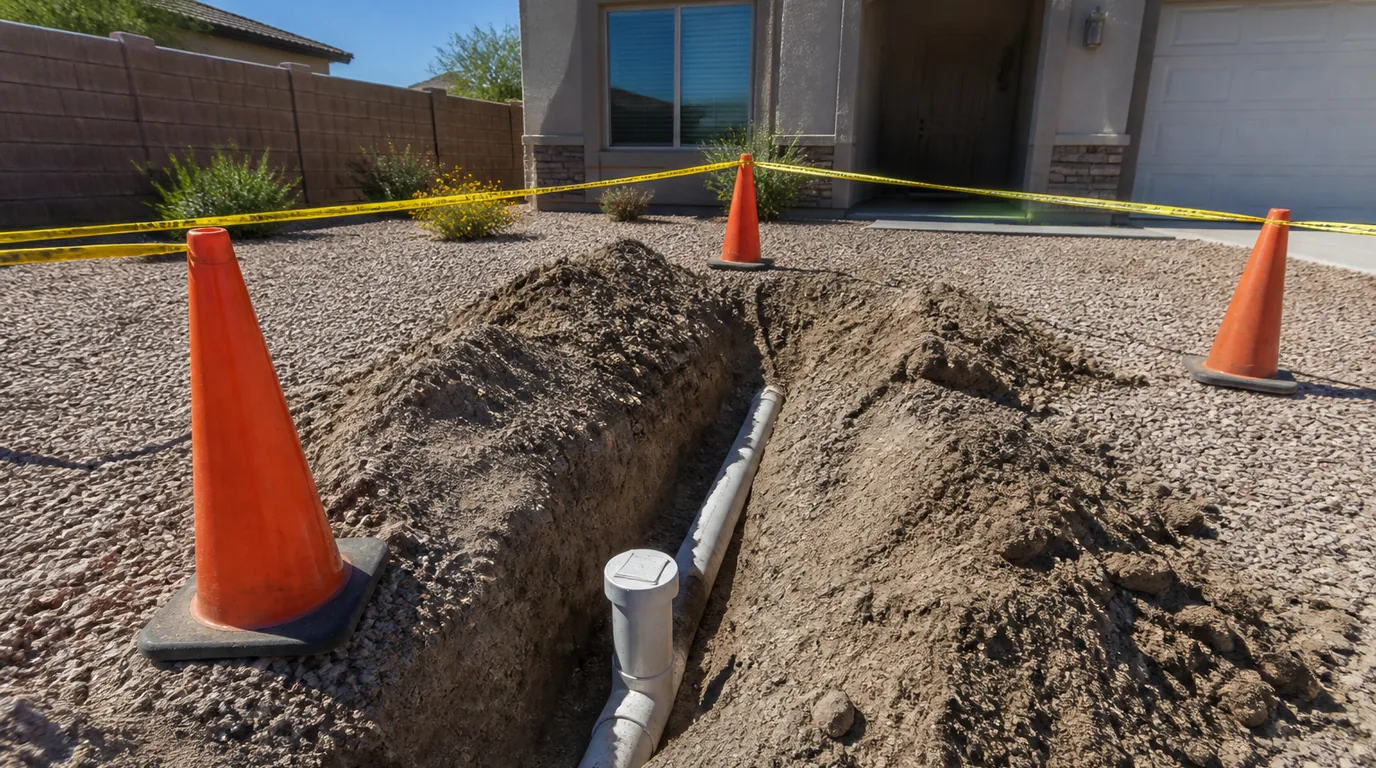
The lateral runs from the house out to the municipal main and relies on gravity, so it needs a steady downhill slope. A dip traps water and waste, and a crack invites roots and soil.
Where the owner's responsibility ends and the utility's begins depends on the city. The City of Peoria's water FAQ has a question on who is responsible for sewer backups, so read the answer for your address before you assume either way.
Roots enter at joints and cracks in search of moisture. Clay pipe can crack or separate at the joints. Older cast iron corrodes from the inside. Soil movement or a heavy load can shift a pipe and create a low spot, called a belly, where debris collects.
Some failures are gradual and show up as recurring clogs. Others are sudden, such as a collapse that blocks the line outright.
After a monsoon storm, a gurgling toilet or a floor drain that backs up can mean stormwater is entering through cracks in the lateral. Schedule an inspection after the weather clears, since the symptom may disappear before the cause does.
Before any dig, call Arizona 811. The one-call service is free, and it gets underground lines located, with sewer lines marked green.
Sewer repair is quoted by the method and the depth. These points matter most.
Ask for the camera footage and the written findings before you approve a large repair.
A camera inspection shows the inside of the line and the location of any damage. The plumber should note the distance from the cleanout and the depth of the pipe, and give you the footage. See sewer camera inspection for what to expect.
With that information, the options become clear: a spot repair for a short damaged section, lining for a longer run in fair condition, or full replacement for a line that has failed along most of its length.
Spot repair digs down to the damaged section and replaces it. Lining, sometimes called trenchless, installs a resin sleeve inside the old pipe and avoids most of the digging. It works when the pipe is still round enough to accept it.
Which method fits depends on the camera findings, the depth, the surface above and what lies on top of the pipe. Ask why the plumber recommends the one they chose, and what the warranty covers.
Sewer repairs often need a local permit and inspection. Arizona 811 (az811.com) arranges marking of buried utility lines, and a call to 811 should come before any digging. Check the license at roc.az.gov, the Arizona Registrar of Contractors lookup, before approving any dig.
Send a camera through the line to see the real condition before you spend on a fix.
Lay a new sewer pipe from the house outward once the old one is beyond repair.
Clear a stopped-up sink, tub, toilet or main drain and find what caused the stoppage.
If several fixtures back up together, the cause is usually in the main line. A camera inspection shows the cause.
Sometimes. Lining avoids most of the digging, but it needs a pipe that is still in reasonable shape.
It depends on the city and the address. Check with your utility before paying for a repair.
Leave the sinks, tubs, toilets and washer alone, since each gallon feeds the backup. Keep people and pets clear of the wet area, and phone the 24/7 line. Clearing the blockage comes first, with inspection of the pipe after.
It depends on the depth, the length, the pipe material and the method. Ask for a written quote after the contractor has seen camera footage.
Septic service is not on this site's service list. Say it is septic when you call, and the dispatcher can tell you whether a contractor handles it.
Do not keep using water. A camera inspection finds the cause, whether roots, a break or a belly in the pipe.
Hold off on water use, keep everyone clear of the soiled area and phone. The person answering will pass you to a nearby contractor.
Service area centered on Peoria and nearby Maricopa County cities.