Drain Cleaning & Unclogging
Clear a stopped-up sink, tub, toilet or main drain and find what caused the stoppage.
A toilet that overflows or leaks needs attention right away, and one that runs or flushes weakly wastes water all day. Most toilet problems come from a few small parts. With a bowl that is spilling over, shut the valve behind it and phone the 24/7 line.
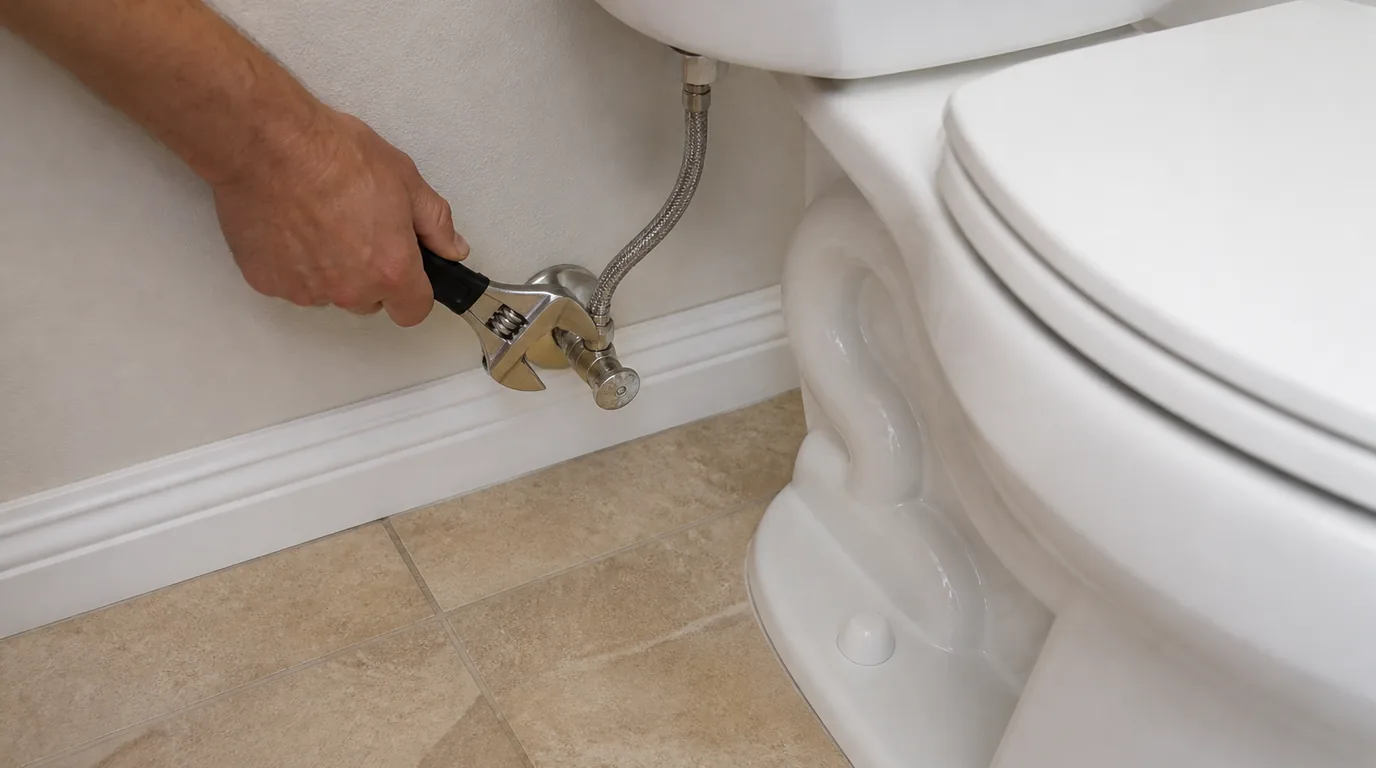
Close the supply valve behind the toilet if it is overflowing, then call.
A running toilet usually comes down to a tired flapper, a fill valve out of adjustment or a chain with the wrong slack. The flapper seals the opening at the tank floor, and once age warps it, water creeps through and the tank refills again and again.
You can test it by dropping food coloring in the tank and waiting fifteen minutes. If the bowl turns color, the flapper leaks. The parts are cheap and the repair is normally a short visit.
A single clog can often be cleared with a flat-bottom plunger used with steady pressure. If the water keeps rising, close the supply valve at the wall to stop the tank from refilling, and stop flushing.
A weak flush with no clog can come from blocked rim jets, a low tank level or a partial blockage in the drain. If the problem persists, or if other fixtures are also slow, the blockage may be in the main line, and the drain cleaning page explains what happens next.
Mineral-rich water leaves scale on fill valves and flappers, which can make them stick or leak. If you see crust around the tank parts, ask about softening, and see the page on softeners.
A running toilet shows up on the water bill. If your meter is moving with everything off, a toilet is one of the first things to rule out, before you call for leak detection.
Toilet work is priced by the part and the time. These factors move the figure.
Ask whether the visit includes the parts and what is charged if the flange needs repair.
Water around the base of a toilet may come from a failed wax ring, a loose bowl or a leaking supply line. Water that appears only after a flush often points to the seal beneath the bowl. A rocking toilet is another sign that the seal is gone.
A leak at the tank bolts or the supply connection is usually simpler to fix. Do not ignore moisture at the floor, since it can soften the subfloor and cause damage that is expensive to repair.
Replace a toilet that has cracked, has outlived its useful years or still flushes poorly after repairs. Newer models use much less water per flush. Seat height and bowl shape matter as well, and many people like a taller bowl.
A bidet seat attaches to an existing toilet and needs a cold water connection and sometimes a nearby outlet. A plumber can add a supply tee and a shutoff valve, and check that the connection is sound. Standalone bidets need their own drain and supply lines.
EPA WaterSense labels toilets that use 1.28 gallons per flush or less. A replacement that carries the label saves water. Confirm the license at roc.az.gov, the Arizona Registrar of Contractors site, especially for a full toilet replacement.
Callers also ask about bidet seats and electronic toilets. Mention the brand and model so the contractor knows what parts may be needed. Some units need an outlet near the toilet.
Clear a stopped-up sink, tub, toilet or main drain and find what caused the stoppage.
Drips, thin flow, stiff handles and leaking hose bibs, fixed at the fixture.
Track down hidden water loss using listening gear and thermal imaging, so only a small patch gets opened.
A worn flapper, a misadjusted fill valve or a tight chain are the usual causes. The fix is often a small part.
Often yes. A bidet seat needs a cold water connection and sometimes an outlet, and a plumber can add the connection.
Shut the valve behind the toilet and hold off on flushing. Phone if the water keeps climbing or other drains are sluggish.
Someone picks up around the clock. For an overflow, shut the valve behind the bowl first and then phone. Installing a new toilet or bidet seat is scheduled for daytime.
Yes, if the water keeps rising or reaches the floor. Shut the valve behind the toilet, do not flush and phone. Slow drains elsewhere can mean the main line is blocked.
It depends on the part and whether the toilet is a standard tank or a specialty model. Ask for a clear quote before the visit.
Removal of the old toilet, a new wax ring, a supply line and setting the new bowl. Ask whether the old toilet is hauled away.
Usually not. Each toilet has its own flapper and fill valve. But if several fixtures act up at once, pressure may be the cause.
That suggests a main line blockage, not just a toilet clog. Stop using water and phone. See drain cleaning.
Turn off the valve behind it and phone. Explain what the toilet is doing and the dispatcher handles the next step.
Service area centered on Peoria and nearby Maricopa County cities.