Gas Line Installation & Repair
Extend or mend gas piping for a range, dryer, grill, fire pit or heater.
New construction plumbing happens in stages. First the pipe goes into the slab and the walls, then, after inspections, the fixtures are set and tested.
Tell the dispatcher whether it is a new home, an addition or a remodel.
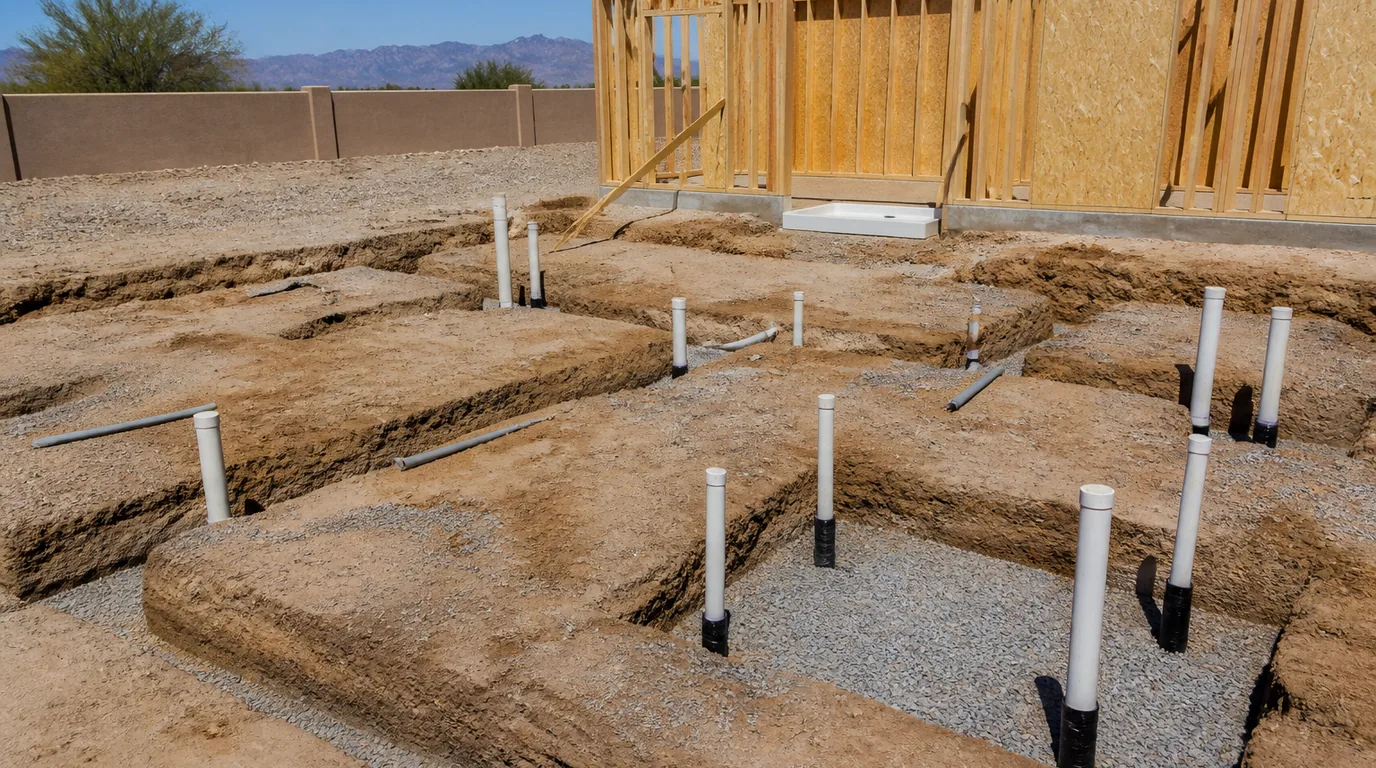
In slab-on-grade construction, the plumber lays drain lines, sleeves and sometimes water lines in the trench before the concrete goes in. The locations must match the plans, because moving a drain after the pour means cutting concrete.
The inspector checks the drain pipe, the slope and the sleeves before the slab is poured. A mistake caught here is far cheaper to fix than one discovered later.
After framing, pipes for supply and drainage go in to every fixture, along with tub and shower valves and vents. Pressure tests on the supply lines and water or air tests on the drains come before drywall closes everything in.
This is the stage when changes are easiest to make. If you want a second sink, a pot filler or a gas line to the patio, tell the builder before the walls close.
New work is quoted by the plan. These factors matter most.
Ask for the quote to be broken down by stage, so you can follow the work.
Peoria's population grew from 154,065 in 2010 to 190,985 in 2020, and the area to the north and west has seen steady building. Surprise grew from about 30,800 residents in 2000 to more than 143,000 in 2020.
Permits and inspections come from the local building authority, and each city has its own process. Ask the contractor who handles them and how inspections are scheduled.
After the walls are finished and painted, the plumber sets the toilets, sinks, faucets, shower trim, water heater and appliance connections. Each fixture is tested for leaks and flow.
A final inspection by the local authority signs off the work. Keep the paperwork and the warranty information for each fixture.
An addition ties into the existing system, and the plumber must check that the existing pipe can handle the added load. Remodels often involve moving a wall or a fixture, and the old pipe may need to be repaired or replaced.
See shower and tub installation and water heater installation for the jobs that often go along with a remodel.
Agree with the builder on who orders fixtures, who pulls permits and who schedules inspections. Plumbing built in stages needs each stage signed off before the next trade covers it, so a missed inspection can stall the whole job.
Mark where the main shutoff, the water heater and any outdoor spigots will sit while the framing is still open. Moving a line later costs far more than placing it correctly at rough-in.
Ask for a copy of the plans and keep photographs of the pipes before walls close. Those pictures settle questions years later about where lines run, and they help the next plumber who works in the house.
Finish work means setting fixtures, connecting appliances and testing every valve and drain. Have faucets, toilets and the water heater on site before the crew returns so the visit is not wasted on waiting.
Run each fixture during the final walk-through, check under cabinets for damp spots and look at the water pressure at the farthest tap. A small drip found now is far easier to correct than one found after the cabinets are loaded.
Rough-in plumbing is inspected before walls close, and the inspection record is part of the home's file. Ask your builder which plumbing contractor is on the job, then confirm that company at roc.az.gov, the Arizona Registrar of Contractors lookup.
Extend or mend gas piping for a range, dryer, grill, fire pit or heater.
Fit a fresh tank heater chosen for household size, fuel type and available room.
Replace a shower or tub along with its valve and drain, and keep the wall dry behind it.
Before the slab is poured or the walls are closed. Changes after that cost more.
Usually the plumbing contractor, but ask. Make sure someone is responsible.
Yes. The plumber checks the existing system and ties the new work into it.
Someone answers day and night. Rough-in follows the builder's calendar, but a pipe that bursts on site can be reported at any hour.
The supply and drain pipes, vents and valve locations, installed before the walls close and inspected.
Call and describe the project. The person who answers will hand you to a contractor who handles it.
Service area centered on Peoria and nearby Maricopa County cities.